The Lizard That Eats Four Times a Year
A Gila monster survives on a handful of meals a year. To manage it, it evolved a version of a human gut hormone that lasts hours instead of minutes — and that molecule became the first GLP-1 medication.
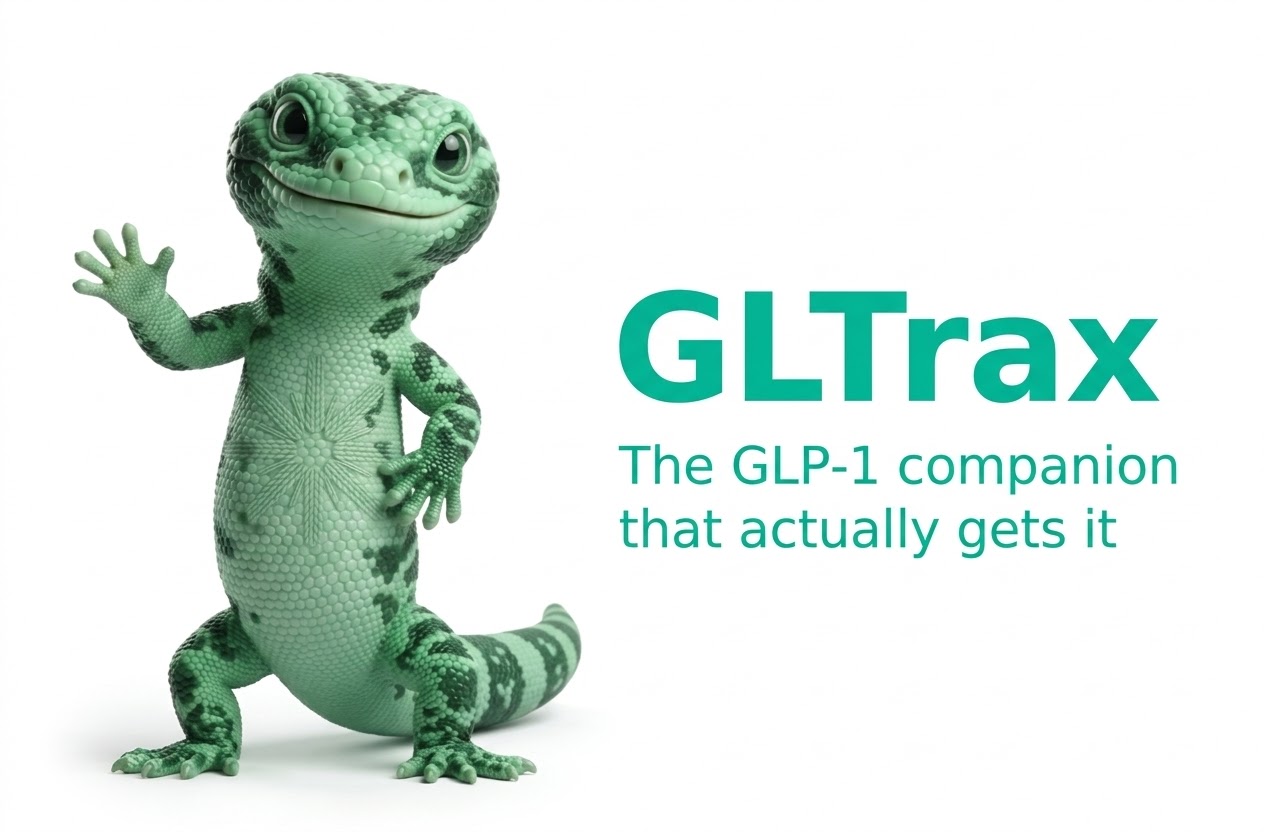
That's our mascot, and it is a flattering interpretation. The real Gila monster is heavier, slower, and roughly the colour of a traffic cone that has seen some things.
He earned the spot anyway, because your medication starts with him.
Four meals a year
A Gila monster can get through a year on as few as four or five meals. Not a day — a year. It eats up to a third of its body weight in one sitting, stores the surplus as fat in its tail, and goes back underground.
That creates a problem. After months of nothing, its gut has to come back online, handle an enormous load at once, and stay coordinated for hours.
Your own gut hormone could never do that job. Human GLP-1 is a message about this meal, right now, and an enzyme in your blood switches it off in about two minutes. Sensible for an animal that eats three times a day. Useless for one that eats three times a season.
So the lizard carries its own version: exendin-4, found in its venom. It shares a bit over half its structure with human GLP-1 — close enough to press the same buttons in the body. But one small piece is shaped differently, and that piece happens to be exactly what the human enzyme grabs onto.
The enzyme can't get a grip. Instead of two minutes, it lasts hours.
In 1992 a researcher named John Eng noticed. A synthetic copy became exenatide, the first medication of this kind, and everything since has pushed the same idea further — liraglutide to a day, semaglutide to a week.
Key point
Your medication is not venom. It's a synthetic copy of one peptide that happened to be found there. No lizards are involved in making it, and they're a protected species.
Which is also why a single morning's weight tells you almost nothing. A signal engineered to last a week is one you read across weeks.
Important
General education, not medical advice. Talk to your own clinician about your treatment.
The long version — the gene that turned out to hold a second hormone nobody was looking for, the lab that found the two-minute problem, and the thirty years of chemistry after — is in how a gut hormone and a venomous lizard became the drug in your fridge.
This article is general education, not medical advice. Talk to your healthcare provider about your own treatment.